.svg)
Al for Product Integrity
Kompass delivers 99.9% accurate, high-speed product inspection up to 12,000 PPM, powered byadaptive deep learning that detects, decides, and acts in real time.Where traditional vision systemsforce a trade-off between speed and accuracy, Kompass maintains both -automatically routingdefects off the line for built-in quality.

Product Inspection powered by closed-loop vision intelligence
Kompass understands the entire product inside-out, adapting in real time to spot subtle flaws and prevent unseen anomalies from slipping through.

SEE

THINK

ACT

LEARN
INTEGRATE
Outperforming Traditional AI-powered and Non-AI vision systems
Turnkey Hardware Integration
KOMPASS
Traditional AI
Train & Retrain Models Effortlessly - No Coding or Al Expertise Needed
DOJO lets manufacturers use their own product images to train and refine Kompass models - enabling fast accuracy ramp-up and continuous learning with zero Al expertise.



Proven Impact of Kompass™ AI in Product Inspection
99.9%
Defect Detection Accuracy
40%
Reduction in False Rejections
33%
Increased Throughput
ROI
in 8–12 Months
One platform, endless inspection applications.
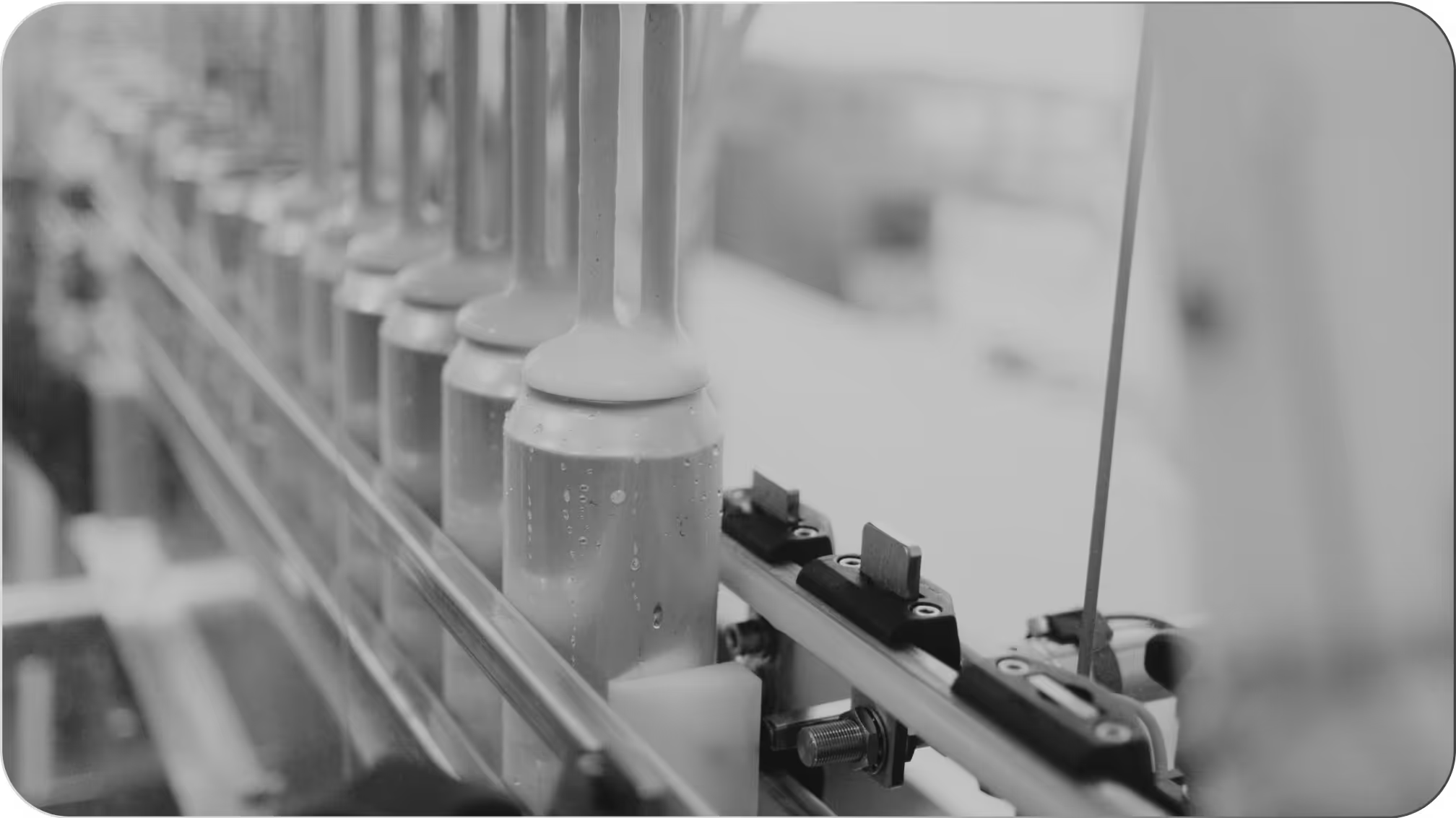
Kompass adapts to any visual quality control challenge, from microscopic surface defects to complex assembly verification, all with the same powerful AI engine.
.avif)
.avif)
.avif)
.avif)
Frequently Asked Questions
What is AI vision inspection software, and how does it differ from traditional machine vision?

AI vision inspection software operates alongside the best machine vision systems via deep learning and adaptive anomaly detection capability to identify defects, misalignments, and anomalies in real time, unlike traditional machine vision systems that rely on fixed rules and templates. The AI-based systems can handle product variability and detect previously unseen defects.
How much data is required to train an AI visual inspection tool effectively?
Surprisingly, effective vision inspection models can be trained using a relatively small dataset. AI-enhanced systems can learn from images of only acceptable parts and flag anomalies, even if the specific defect hasn’t been seen before.
Can AI-based inspection systems integrate with my existing cameras and PLCs?
Yes. Modern computer vision inspection systems are designed to plug into existing hardware, such as cameras, PLCs, and MES/ERP platforms, allowing for seamless integration without disruptive overhauls.
What types of defects or use cases can AI-powered quality control systems handle?
AI visual inspection systems are versatile, they can detect surface scratches, dents, misprints, assembly errors, missing components, and labeling inconsistencies in real time. They’re effective across industries like automotive, electronics, pharmaceuticals, and FMCG.
How accurate are automated defect detection software systems?
Well-designed AI vision inspection systems can achieve over 99% detection accuracy, significantly reducing false positives and ensuring consistent quality—outperforming human inspectors in terms of both reliability and speed.
How quickly can an AI visual inspection platform be deployed and begin delivering ROI?
Depending on complexity, deployment can take anywhere from a few days to several weeks. ROI is often realized within months—thanks to improved throughput, reduced waste, and faster time-to-inspection.
CONNECT WITH OUR EXPERTS
Maximize Quality & Productivity with Our Vision Inspection System for Manufacturing and Logistics.


